
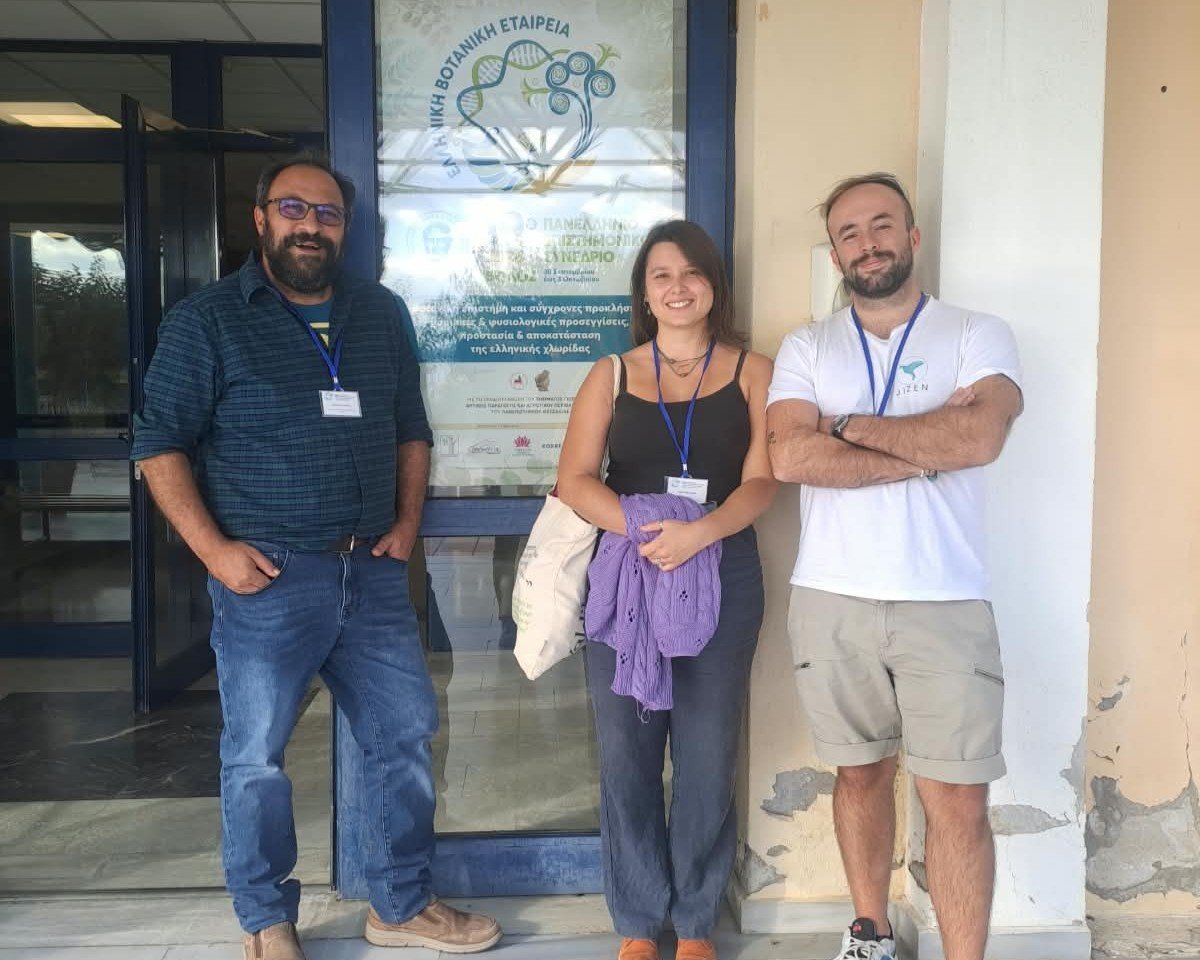
Recently two doctoral researchers from the FutureForests network, Sofia Berlanda and Marco Falda, participated in the 19th Panhellenic Scientific Conference in Volos, Greece. Organised by the Hellenic Botanical Society, the title of the conference was ‘Botanical science within the context of modern challenges: from molecular and physiological approaches to the conservation and restoration of the Greek flora’, and it took place at the facilities of the Department of Agriculture, Crop Production and Rural Environment at the University of Thessaly.
As part of the conference programme Sofia and Marco were invited to present the early findings of their PhD research projects to attendees.
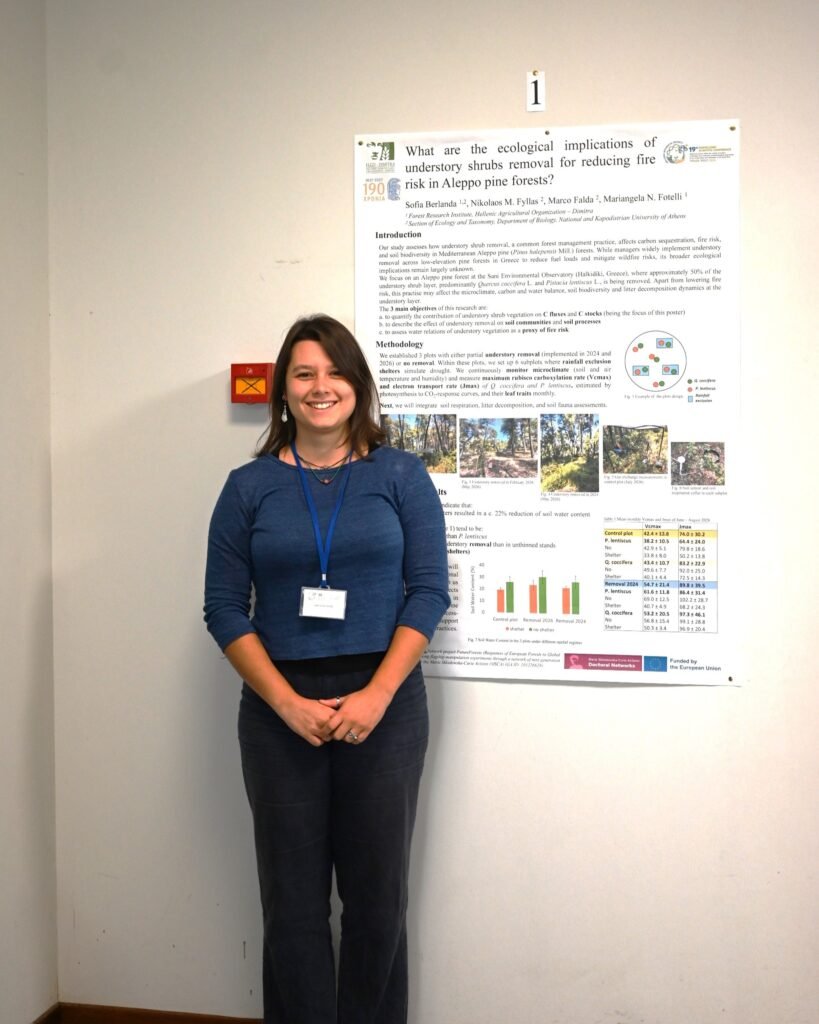
Sofia, who is based at Greece’s Forest Research Institute (Hellenic Agricultural Organization Dimitra) has focused her PhD research on the ‘Effects of understory removal on C sequestration, fire risk, and soil biodiversity in Mediterranean pine forests Manipulations’. At the conference she presented a poster titled ‘What are the ecological implications of understory shrubs removal for reducing fire risk in Aleppo pine forests’ which showed the first steps of her research – methodology and primary results – and was very well-received by other attendees.
Marco, who is based at the University of Athens in Greece, has titled his PhD research project ‘Modelling the effect of understory removal of C-fluxes and fire risk in Mediterranean forests’. At the conference he explained more about his initial research, which focuses on developing and improving the Trait-Based Simulator (TFS), a forest model aimed at better representing the ecophysiological processes driving forest dynamics. In particular, he has worked on incorporating intraspecific functional trait plasticity to capture variability among individual trees of the same species within a forest plot, ultimately improving our understanding and simulation of forest responses to changing environmental conditions.
As well as presenting their research, the conference was also a valuable opportunity for the students to network with other researchers, exchange ideas, learn from more experienced academics, and connect with the greater scientific community. Both Sofia and Marco reported returning to their work after the conference with reinvigorated energy and new valuable connections and skills which would help them with not just their FutureForests studentship, but also their future career.
The visit to Volos also included an additional field trip to Mount Pelion, where the students hiked through different types of vegetation from Mediterranean oaks to beeches and chestnuts. Sofia recalls this as a highlight of the experience, stating:
“I saw some villages and little towns of the area that have traditional architecture, and in the square of one of these villages we saw a plane tree which turned out to be a century old. I will be taking this with me.”