About Us
Who We Are
The FutureForests network sits at the forefront of academic efforts to help mitigate climate change. Launched in 2025, the network brings together forestry research experts from across Europe to collaborate and train the next generation of scientists, with the aim of informing future forest policies and helping the EU prepare for impending climate challenges.
Our forests are in danger, and they are particularly threatened by global climate change factors such as increasing frequency and severity of climate extremes (e.g., soil drought, extreme heat, high evaporative demand, etc.), fires, and increasing atmospheric carbon dioxide and nitrogen pollutants. By uniting Europe's most sophisticated forest manipulation facilities which examine how forests respond to these threats, we are decoding the mechanisms of forest resilience to learn how we can combat climate change and ensure these ecosystems continue to exist for future generations. More than just a research project, FutureForests is a coordinated European response to the environmental volatility we face today, and a positive force for change.
Aims and Objectives
FutureForests seeks to provide a holistic understanding of forest responses to global climate change, ensuring that European forests continue to provide essential services like climate regulation and biodiversity conservation in the future.
Scientific Objectives
The research programme is built around four interrelated science objectives designed to address critical uncertainties in forest ecology:
• Tree Functional Processes: assessing how global change impacts tree metabolism, growth, and carbon-water relations.
• Soil Processes: quantifying the effects on soil nutrient cycling, organic matter dynamics, and carbon sequestration.
• Biodiversity and Health: investigating the impacts of environmental stressors on forest biodiversity and the vulnerability of trees to pests and diseases.
• Ecological Modelling: advancing model-data integration to better predict forest responses to climate extremes and reduce fire risks.
Training Objectives
FutureForests aims to equip 15 Doctoral Researchers (DRs) with the ‘most wanted’ skills for both academic and non-academic sectors:
• Expertise Development: providing in-depth training in forest ecology, biogeochemistry, ecohydrology, and ecosystem modelling.
• Intersectoral Mobility: offering a platform for directed training through mandatory secondments to flagship facilities and non-academic stakeholders (industry, NGOs, and government).
• Transferable Skills: developing intellectual, problem-solving, and communication skills required to lead future careers across the forestry sector.
Strategic and EU Objectives
The network is designed to deliver impactful research that informs major international environmental policies:
• Policy Support: providing evidence-driven insights to inform forest policies under the EU Green Deal, the Paris Climate Agreement, and the UN Sustainable Development Goals.
• Innovation Capacity: strengthening European leadership in research and innovation by fostering supra-disciplinary and intersectoral collaborations.
• Sustainability: identifying complementary training programmes across European flagship forests to ensure the long-term resilience and management of these ecosystems.
Who's Involved?
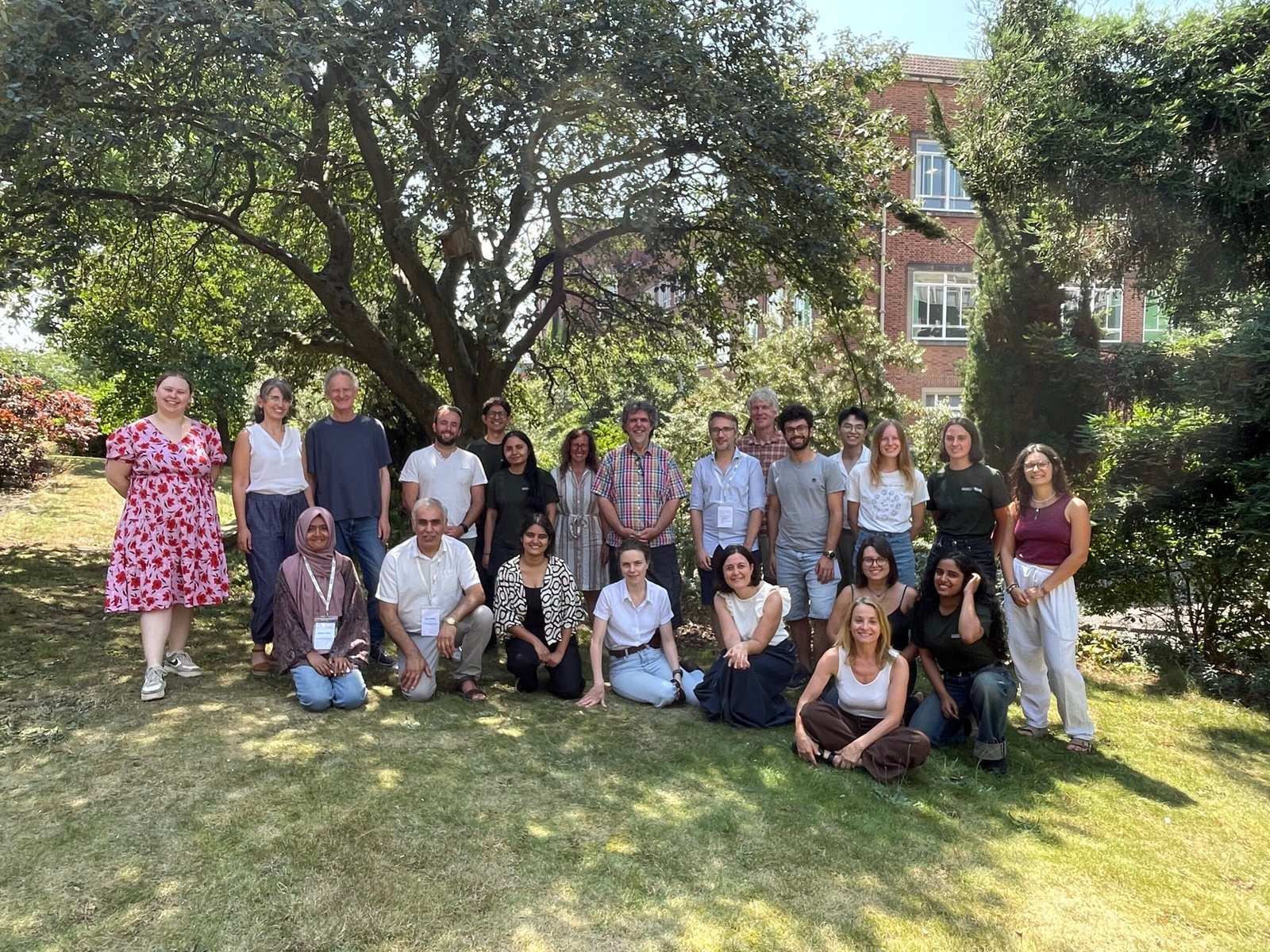
The FutureForests network includes a wide variety of partners, connected by nine flagship forest manipulation facilities across Europe. The network is structured as a collaborative ecosystem where academic institutions, industry experts, NGOs, and government bodies work together to understand how forests respond to global climate change and to bridge the gap between fundamental forest science and real-world policy application. It is made up of four key groups: a Project Coordinator, 10 Beneficiaries (PIs), 13 Associated Partners (APs), and 15 Doctoral Researchers (DRs).
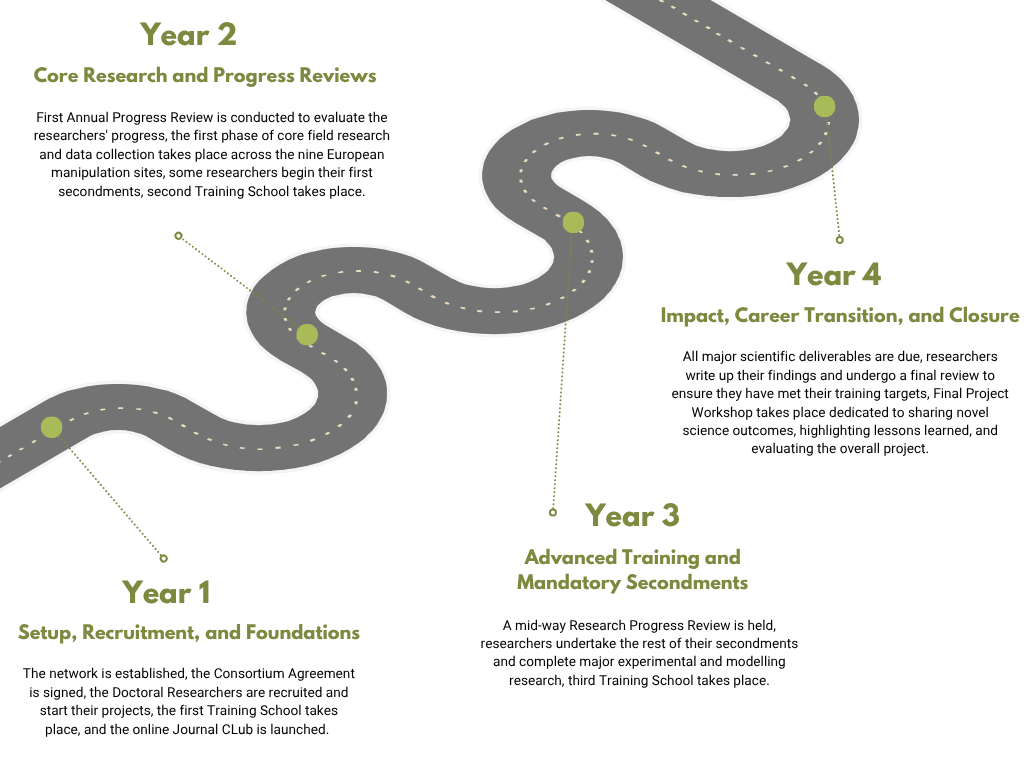
Timeline
The FutureForests project will take place over a four-year (48-month) period. The timeline is structured to move the 15 Doctoral Researchers from foundational training to core experimental research, specialised secondments, and finally to career transition and the dissemination of results.